Island, Harbour or Open Beach: Three Different Screen Settings
Compare island, harbour, and open beach settings in film to see how each shapes mood, community, and visual composition—and choose the right fit for your story.
Island, harbour, and open beach settings give filmmakers three distinct ways to compose a coastal story. An island can make a community feel self-contained; a working harbour layers people and tasks into the frame; an open beach puts bodies against an uncluttered horizon. Choose among them by asking what the audience should notice about the characters’ world, not simply which view looks most striking.
These locations differ in more than access. They carry different visual textures, social rhythms, and kinds of everyday detail. A useful comparison starts with the scene’s mood and the people who would plausibly use the space, then considers how the camera can make those qualities visible.
How do island, harbour, and open beach settings shape a film?
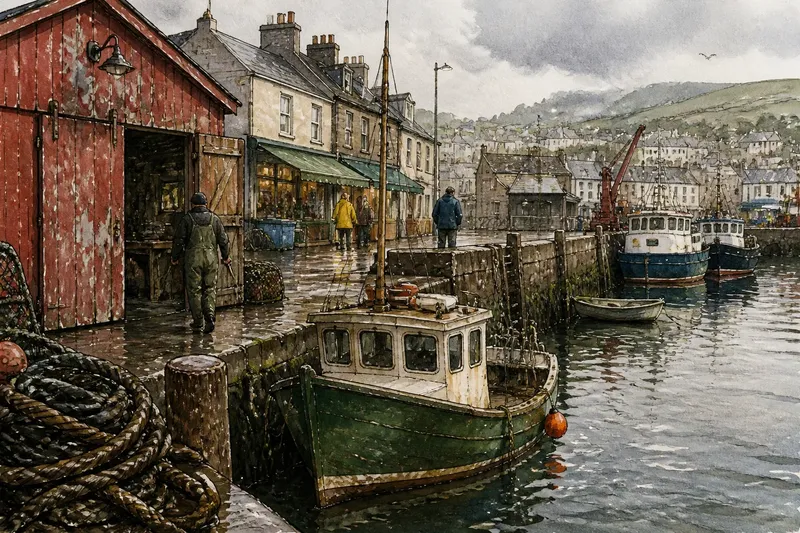
An island is useful when the story needs a strong sense of local identity. Repeated landmarks—a shop, a dock, a village street—can help the audience recognize a shared world as characters return to familiar places. A harbour brings visible activity and varied textures: painted hulls, work gear, wet pavement, and the shifting arrangement of boats. An open beach offers a simpler frame, where sky, water, and sand can make a character seem small or exposed.
Think of the settings as different visual instruments. The island gives a film recurring places and a contained community. The harbour supplies layered detail and overlapping purposes. The beach strips the frame back, making posture, spacing, and the horizon carry more weight.
- Island: Check whether recurring landmarks and a recognizable local community suit the story. If they do, use a few distinct places as visual anchors; if they do not, choose a setting with more varied backdrops.
- Working harbour: Check whether boats, tools, and active work belong in the scene. If they do, let those details shape the frame; if they do not, choose a quieter waterfront rather than treating a working site as decoration.
- Open beach: Check whether a spare composition and visible bodies support the mood. If they do, keep the frame open; if the scene needs visual cover or rich background detail, use a built-up shore instead.
What makes an island feel like a community rather than a backdrop?
Give the island a pattern of ordinary life. The same shopkeeper, local noticeboard, or familiar stretch of road can establish that characters inhabit a place rather than merely pass through it. These details also help the audience distinguish local knowledge from a visitor’s first impressions.
Keep the island’s social world specific. A dock might be a workplace in one scene and a meeting place in another, but its role should follow the people who use it. If everyone appears only when the plot needs them, the island can feel like scenery. Let recurring characters have recognizable routines, and let the camera notice those routines without explaining every detail.
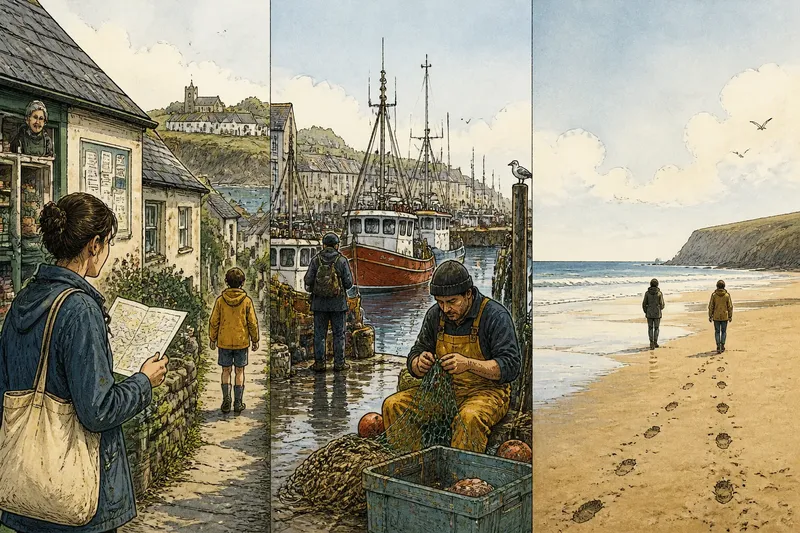
Imagine a film following a new teacher who has just arrived on an island. The first scene shows her checking a hand-drawn map outside the village shop; later, she recognizes the same shopkeeper at the dock and follows a local child along a familiar lane. The repeated places make her gradual orientation visible, while the result is a community with a texture beyond the teacher’s arrival.
Why does a working harbour create such layered images?
A harbour combines practical activity with a changing visual background. Ropes, crates, railings, boats, and signs can divide a frame into distinct areas, while workers and visitors give those areas different purposes. The setting can feel busy without requiring a crowd: one person repairing gear and another waiting nearby may be enough to create contrast.
Use that detail selectively. A close view of hands sorting a net can make labor the focus; a wider shot can place the task among boats and buildings. If the story concerns residents and visitors, let their different uses of the same place show through behavior rather than relying on a line of dialogue to explain who belongs.
A working harbour is not a generic promenade. The kind of activity on site affects what a scene can plausibly show, and restricted areas should remain restricted. Follow posted rules and local guidance when filming or describing access to a working waterfront.
When does an open beach make the strongest composition?
An open beach can simplify the image until small gestures become prominent. A lone figure, a gap between two people, or a set of footprints may stand out against broad sand and water. That visual spareness can suit a scene of reflection, disagreement, or temporary company, provided the characters have a believable reason to be there.
Composition matters more than a sweeping view. A low camera angle can bring attention to footprints or shells; a distant frame can emphasize the space between people. If the beach needs a point of human activity, a path, public access point, or nearby café can anchor the scene without crowding the horizon.
Choose the beach for openness, not as a shortcut for an emotion. A quiet stretch does not automatically make a scene feel peaceful, and a wide horizon does not supply the characters’ motives. The framing and action need to do that work.
Which setting fits your film’s visual and social needs?
Use these questions to compare the settings before settling on a location. Each answer points toward a different visual and social effect.
Does the story need recurring local landmarks?
An island can make a small set of familiar places feel central to the characters’ lives. If the film needs frequent changes in visual texture instead, a working harbour may offer more varied activity and background detail.
Should practical work be visible in the frame?
A working harbour is the clearest fit when tools, vessels, and tasks belong to the story’s world. If the scene needs quiet rather than visible labor, choose an open beach or another less active coastal place.
Would a spare background sharpen the characters’ gestures?
An open beach can leave posture and spacing unobstructed. If the scene depends on layers of objects or overlapping activity, the harbour is likely a stronger visual match.
Should the coastal setting feel socially familiar or newly encountered?
An island can support a sense of recurring community, while a harbour can place different groups alongside one another. A beach often feels more temporary, unless recurring paths, gatherings, or local routines establish a stronger social pattern.
How can you choose a coastal setting without relying on postcard imagery?
Start with a scene’s ordinary details: what people handle, where they pause, and which background objects would naturally remain in view. Then decide whether the film needs repeated local landmarks, visible work, or an open composition. Those choices lead toward an island, harbour, or beach more reliably than choosing a location for its scenery alone.
For a practical comparison, imagine you are planning a scene in which a local resident meets a newcomer. If the aim is to show the newcomer learning a small community’s routines, choose an island and repeat a shop or lane as a landmark. If the aim is to put the two characters amid different kinds of everyday activity, choose a working harbour and let their attention diverge toward separate tasks. If the scene should focus on their expressions and the space between them, choose an open beach and keep the frame uncluttered. The resulting choice depends on whether the scene needs familiarity, layered activity, or visual openness.
Island, harbour, and open beach settings each offer a distinct visual vocabulary: recurring landmarks, layered work, or open composition. Use those qualities to make the coastal place part of the film’s social world, not just a pretty view. A few well-chosen details can tell the audience how a community lives and what its characters notice.