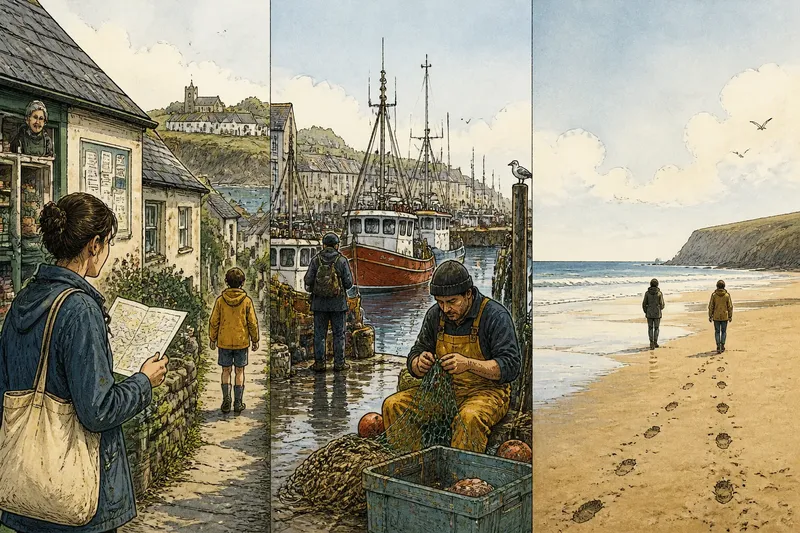
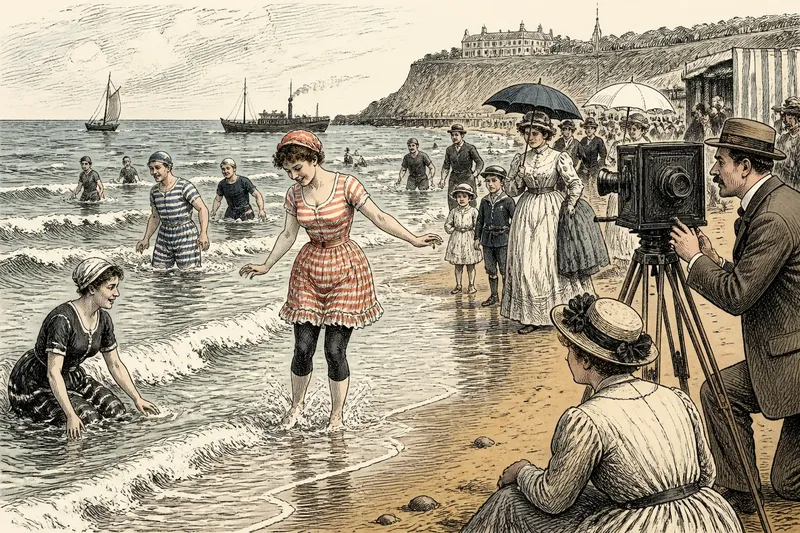
How Film Shorelines Shape What Characters Can See
See how film shorelines shape a scene’s information, attention, and suspense by tracking sightlines, sound, framing, and what the camera withholds.

A breakwater can hide a boat, while a headland gives one character a view the others lack. Film shorelines shape what characters and viewers can see, turning the coast into a system of information rather than simply a backdrop.
To read that system, watch how landforms, weather, sound, and camera framing reveal or conceal details. The useful question is not what the water symbolizes by itself, but what the scene lets you notice—and what it makes you wait to learn.
What does the first coastal shot let you notice?
Begin with the first shot in which the coast affects what is visible or audible. A broad view may establish a harbor’s layout; a close shot of spray may obscure the far shore. Record the scene’s observable details before assigning them meaning.
- What sits in the foreground, middle distance, and background?
- Which people, buildings, or vessels are visible at once?
- Does a cliff, wall, pier, or haze hide part of the view?
- Can you hear something before you see its source?
These details help distinguish a location shot from one that manages information. A coastline may matter because it gives someone a lookout, breaks up a view, or fills the soundtrack with surf that masks a conversation.
Say a fictional drama opens with Mara standing beside a harbor office as a foghorn sounds. The starting information is that Mara is on the quay, the sound comes from somewhere beyond the frame, and the harbor is partly obscured. If the camera then reveals a vessel behind a breakwater, the viewer learns its location at the moment the image provides it; the coast has controlled the timing of that discovery.
How does framing control the coastal view?
Compare what a character can see with what the camera shows. A character facing the water may have an unobstructed view, while the camera holds on their expression and excludes the object of their attention. In another scene, a wide shot may reveal a boat approaching before anyone on the beach reacts.
Pay attention to edges and obstructions. A pier can divide a frame; a seawall can hide activity below its top; a window can turn the coastline into a view within the scene. The framing may direct attention to a person, conceal a detail, or invite the viewer to scan the image for movement.
Editing changes the effect. A cut from a character’s glance to an empty stretch of water may leave the object of attention uncertain. A later cut can supply the missing view—or keep it withheld. Describe the order of shots before deciding what the omission means.
How do sound and weather change what is known?
Coastal sound can carry information beyond the frame. A bell, engine, gull call, or foghorn may indicate activity without showing its source. Surf and wind can also drown out speech, making a conversation difficult to follow even when the characters remain visible.
Weather adds another layer. Fog reduces visual detail; glare can flatten the surface of the water; rain may turn a distant figure into an indistinct shape. Note the specific effect on the scene rather than treating any weather condition as shorthand for a mood.
Imagine a fictional scene in which Mara waits on a pier while her brother searches from a nearby bluff. Start with the visible setup: fog covers the water, and a foghorn sounds offscreen. If the camera stays on Mara as she turns toward the sound, the audience shares her uncertainty about the source; if a later shot reveals her brother on the bluff, the sound has linked two separate views without showing either character’s full surroundings.
What questions help you read a coastal scene?
Can the character see what the audience sees?
Compare the character’s eyeline and position with the camera’s view. If the frame reveals a vessel or person outside the character’s apparent view, the audience has information the character does not.
What does the coastline conceal?
Look for cliffs, seawalls, piers, fog, and other features that interrupt the image. If a feature hides an object or person, describe what remains unseen and when the film reveals it.
Does sound reveal something outside the frame?
Listen for engines, bells, surf, or voices whose sources are not visible. If the sound gives a clue without identifying its source, note how long the scene preserves that uncertainty.
Would the same shot work inland?
Consider whether the scene depends on a coastal feature such as open water, a harbor echo, or a breakwater. If removing that feature would change what the audience can see or hear, the coast is shaping the scene’s information.
How can you separate a visual effect from a symbolic claim?
Start with a claim that can be checked against the scene: “The breakwater hides the boat until the camera moves past it.” A larger claim—such as the boat representing escape—needs support from more than one image or from the film’s dialogue and plot.
Watch for repetition and consequence. Does the film return to the same headland when characters learn new information? Does a recurring sound signal an arrival? Repeated choices can support a broader interpretation, but one foggy shot alone may simply limit visibility.
A concise viewing note can preserve both the physical detail and its narrative effect: “From the bluff, the camera shows the boat before Mara sees it; the cut gives the audience an early warning.” That sentence identifies the location, the framing choice, and the information gap without asking the coastline to carry a fixed meaning.
When you analyze film shorelines, track the moment each detail becomes available: first to a character, first to the camera, or first to the audience. That timing often explains a scene’s suspense more clearly than a broad claim about what the sea represents.