A Windy-Day Rewatch, With Your Eyes on the Edges
Rewatch a coastal film through its rooms, windows, and weather to notice how wind and sea sounds shape domestic scenes from inside.
A coastal film rewatch can reveal how weather reshapes a room before the camera shows the shoreline. Watch the curtains stir, light shift across a wall, or a character pause as wind rattles a window; those interior details make the coast felt as a physical condition, not just a view.
Choose a film with homes, workplaces, or public rooms near the sea. Keep a notebook or notes app open, but give each viewing one focus and follow the same simple sequence: an uninterrupted first viewing, three focused rewatch sessions, then one uninterrupted closing viewing. That makes the plan easy to follow without turning a relaxed week into homework.
What should you notice on the first viewing?
Watch the film once without pausing. Notice which rooms recur, what people do in them, and when the weather becomes audible or visible. Do not try to catalogue every window. You are building a rough sense of the film’s indoor world.
Afterward, make three short note headings: “room,” “weather,” and “camera.” Under “room,” name a kitchen, waiting room, pub, or boat shed. Under “weather,” note rain, wind, spray, or a gull heard outside. Under “camera,” record whether it stays with the people indoors or looks outward. Keep observations factual: “rain streaks the kitchen glass” is more useful at this point than “the room feels lonely.”
How does weather alter a room’s atmosphere?
In the first focused session, follow weather inside. Look for a curtain lifting, damp coats steaming near a heater, a window clouding, or a strip of daylight shifting across a table. Such details show how the room responds to the coast, even when the film never cuts to a beach.
Listen as closely as you look. Rain tapping glass, wind humming through a loose frame, or surf muffled by walls can give a quiet room a changing soundscape. Note what the characters do in response. A person raising their voice may be reacting to the wind; someone closing a curtain may be managing glare rather than avoiding a view.
What do windows and light tell you?
Use the second focused session to follow the image at the window. A pane may hold a flat band of grey water, catch a face in reflection, or turn bright sky into a pale patch on the floor. Notice the camera’s position: does it share the person’s view, stay on the person looking, or layer both face and landscape in the glass?
Light can change the character of the same room from scene to scene. Watch for glare that obscures detail, a reflection that overlays a face, or a dim interior against a bright sea. Treat these as visual choices rather than automatic symbols. A clear view need not mean comfort, and a dark window need not mean fear; the surrounding action gives the image its weight.
How does a character respond to the conditions?
In the third focused session, watch bodies and small adjustments. Someone may lean into a gust, pull a collar close, move a chair away from a draft, or pause while rain lashes the glass. Ask what changes in the scene because of the weather. It may interrupt a conversation or make an ordinary task awkward; it may simply remain part of the day’s texture.
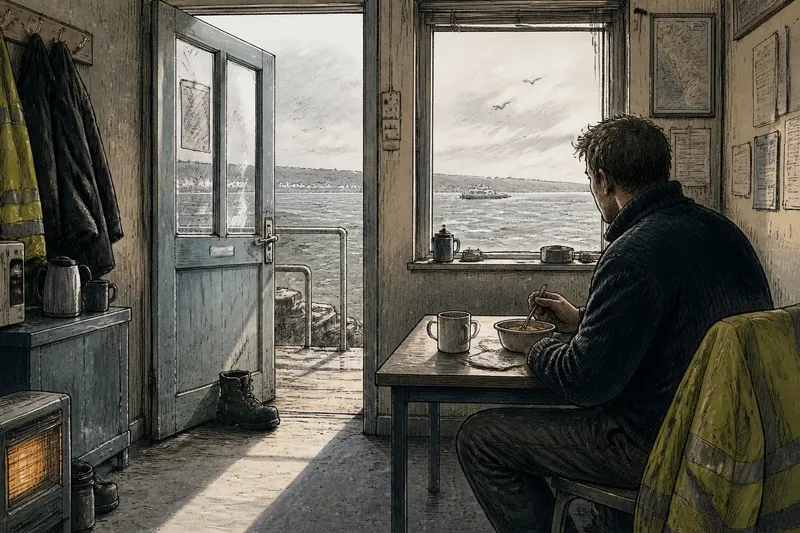
Imagine a film scene set in a ferry-office break room, with a worker eating lunch beside a back door on a windy afternoon. The door drifts open, and the worker wedges it with a boot; the expected result is a narrow band of cold light on the floor while the conversation carries on. On rewatch, note the visible action and its effect on the room before deciding whether it carries any larger meaning.
Which details should you compare across scenes?
Choose one room that appears more than once and compare its changing conditions. A kitchen might be warm and dim in one scene, then washed with glare in another. The room remains the same, but light, sound, and the characters’ behavior make it feel different.
Write down no more than two clear contrasts: for example, “quiet window, closed curtains” and “windy window, curtains moving.” Then ask what else changes at the same time. Is someone alone or in company? Is the camera close to a face or wide enough to show the whole room? Those specifics help you describe the film’s interior weather without forcing every detail into a symbol.
What do readers often ask about a coastal film rewatch?
Should I pause to write down every detail?
No. Pause only when a sound, shift in light, or physical response changes how you understand the room. A couple of precise notes are enough for each focused session.
Does a window always make the room feel separate from the sea?
No. It can frame a view, reflect a face, admit glare, or carry the sound of weather into the room. Consider what the camera shows and how people behave beside it.
What counts as weather inside a scene?
Look for visible changes such as moving curtains or wet glass, audible details such as rain or wind, and bodily responses such as bracing against a draft. The film may use one or combine several.
How do I keep the rewatch relaxed?
Keep the sequence to one first viewing, three short focus sessions, and one final viewing. Stop each focused session after you have a couple of useful observations; you do not need to cover every room or scene.
What should you do on the final viewing?
Watch the film straight through once more, with your notes nearby but no need to consult them. See whether an interior detail now stands out: perhaps a room repeatedly fills with wind noise, or a familiar window changes from bright to reflective as the story moves on.
After the credits, choose one room and describe its strongest combination of image, sound, and weather. For instance, note the rain on the glass, the muted light on a table, and a character continuing a routine. This gives you a specific way to remember how the film lets the coast shape domestic life.
A coastal film rewatch works best when it stays attentive to what the room actually does: how it catches light, carries sound, and asks people to adjust. Keep the details small and concrete. They can make the coastline present even when the frame never leaves the house.